In 2016, GoDaddy built something I genuinely think is good for the internet.
They created Domain Connect – an open protocol, MIT-licensed, designed to let anyone connect a custom domain to any service with a single click. No DNS knowledge required. No manual record entry. No support tickets. You click a button, approve the change, and your blog/email setup/shop just works.
That's the kind of thing that makes the internet more accessible. The kind of thing you'd actually want the largest domain registrar in the world to build.
And for a while, it worked exactly as intended. Providers submitted templates to a public GitHub repository. DNS providers synced them. Customers got one-click setup. Open standard. Free to use. Anyone could participate. Happy days.
This is where the story should end. But unfortunately, it doesn't.
The Antitrust Lawsuit That Made Things Worse
In 2021, a company called Entri launched Entri Connect – a commercial DNS automation service. Same idea as Domain Connect, but proprietary, and it worked with more registrars. GoDaddy and Entri partnered for a while, then GoDaddy cut Entri off and tried to push everyone back to its own Domain Connect implementation. GoDaddy controls roughly 40% of the U.S. domain registration market, so this was an existential threat to Entri's business.
In July 2024, Entri sued GoDaddy for antitrust violations under the Sherman Act. A Virginia federal judge denied GoDaddy's motion to dismiss, noting that their market share was well above the threshold for establishing market power. The case was moving forward.
Then, exactly one year ago today, on 24 February 2025, it was dismissed. Both parties dropped all claims. The settlement terms remained undisclosed.
Four months later, we found out why.
On June 18, 2025, Entri and GoDaddy announced a “multi-year agreement” to integrate GoDaddy's Domain Connect into Entri Connect. The company that sued GoDaddy for antitrust violations is now the exclusive gateway to GoDaddy's open protocol 🙃
The lawsuit didn't break up a monopoly. It created a duopoly.
What This Looks Like in Practice
If you're a service provider, and you want to onboard a Domain Connect template to GoDaddy – the registrar behind 21% of all .com DNS – your only option is to go through Entri. GoDaddy will not onboard templates directly. Multiple service providers in the Domain Connect Slack community have tried and been explicitly turned away.
Entri's pricing starts at $249 per month. Entri's CEO proudly announced in the Slack community that...
Entri tries to offer a lower risk price point ($249 p/m, no commitment) and a better overall UX, relative to the $3k template.
What's the $3k template, you might ask? Well, that's what GoDaddy now charges service providers if they don't want to partner with Entri. Per year.
So, you can either have the “lower risk price point” of $249 per month, adding up to $2988 per year, or you can pay GoDaddy $3000 per year. Thank you Entri, for saving us $12 per year.
GoDaddy, however, was just the beginning. IONOS – another large Domain Connect provider, managing roughly 2% of .com DNS – began redirecting service providers to Entri too. Same story: you contact IONOS about template onboarding, get told to talk to Entri.
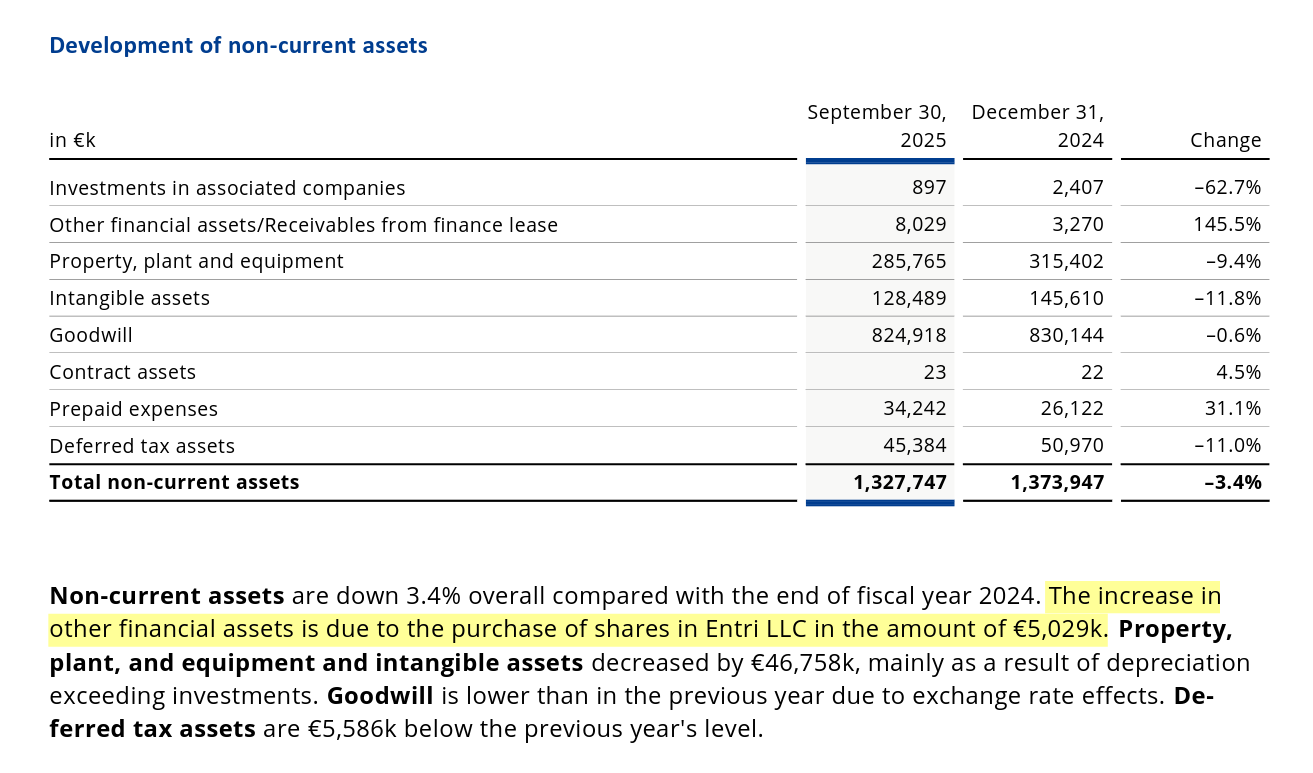
But IONOS isn't just a partner. They're an investor. Their Q3 2025 interim financial statement discloses the purchase of shares in Entri LLC for €5,029,000. When IONOS tells you to go through Entri, they're sending you to a company they own a piece of.
So now we have:
- GoDaddy (21.5% of .com DNS): exclusive partnership with Entri, born from an antitrust settlement
- IONOS (1.9% of .com DNS): €5M equity stake in Entri, redirects all onboarding to them
- SecureServer (1.0%, GoDaddy subsidiary): same arrangement
That's roughly 24% of the .com DNS market where an open protocol has been commercially captured. Not through innovation – through litigation, settlement, and investment.
What the Community Is Saying
I'm not the only one seeing this. In the Domain Connect Slack community, service providers of all sizes are hitting the same wall.
The CEO of a decently sized email sending provider brought up that both GoDaddy and IONOS told his team to go through Entri. He called it deeply problematic. A single commercial company inserted between an open protocol and its adopters.
Engineers from another service provider confirmed the same experience. They could afford the fee but refused on principle.
Other developers shared that their templates were approved on the Domain Connect GitHub repository months ago, but GoDaddy never synced them. When they asked why, the answer was always the same: Entri.
And here's the part that reveals the real nature of the arrangement: Entri's integration isn't even Domain Connect. Multiple service providers have confirmed that Entri expects a custom integration using their own proprietary API. You implement an open standard, submit your template, get it approved – and then you're told none of that matters. Pay Entri, use their API instead.
Why This Matters
I run Magic Pages – a managed Ghost hosting platform. And I got into all of this because I wanted to build a better domain connection flow for my customers. I implemented Domain Connect because it's a good protocol, built by good people, solving a real problem.
And it works. Cloudflare approved our template within mere minutes of contacting them. NameSilo synced it automatically from the GitHub repository. Smaller DNS providers like DomainChief did the same. When DNS providers honour the protocol, the experience is exactly what was promised.
But for roughly a quarter of the .com DNS market, the protocol has been captured by a commercial arrangement between corporations.
I'm not anti-business. Magic Pages is a commercial product built on Ghost, which is open source. I charge money for it. But there's a difference between building on top of an open ecosystem or building in front of it. Magic Pages doesn't lock anyone out of Ghost. If we disappeared tomorrow, every customer could self-host or move elsewhere. Open standards. The open source project would be fine.
What's happening with Domain Connect is different. The largest DNS providers are investing in a commercial gatekeeper and making that gatekeeper mandatory. The protocol still works. The templates still exist. The open repository is still maintained. But the companies with the most market power have decided that access to their platforms goes through a toll booth.
What's Next for Magic Pages
Well, I'm not paying. Entri Connect is a nice product. It works flawlessly. Hell, it would make my life so much easier. Less support tickets fixing DNS. But even if Magic Pages could afford it, I am refusing on principle.
Here's what the new domain setup flow for Magic Pages will look like:
Domain Connect will be available for providers that honour the protocol. Cloudflare, NameSilo, DomainChief, and others still onboard templates directly. The experience is exactly what the protocol's creators intended. It works with the click of a button.
Other providers will get manual flows. Even if they theoretically support Domain Connect. Our widget will detect the DNS provider and show step-by-step instructions tailored to their dashboard. Direct links, correct field names, common gotchas. More work to build, but no corporation can gate it.
Is this as elegant as universal one-click setup? No. But it works for every provider, it costs nothing, and no one can put a lock on it tomorrow.
Where We Stand
Domain Connect is a good protocol. The maintainers and community are doing important work. The standard itself is sound, open, and well-intentioned.
The real story is what happens when large corporations look at open infrastructure and see a revenue opportunity. GoDaddy built an open standard, then gated it behind a commercial vendor after an antitrust settlement. IONOS invested millions in that same vendor and redirected service providers to them. And the result is that a protocol designed to make the internet more accessible is now less accessible than ever – unless you pay.
The people who lose are the ones Domain Connect was built to help. The blogger trying to connect a custom domain. The small business setting up email. The creator who doesn't know what a CNAME record is and shouldn't have to. They were supposed to get one-click setup. Instead, they get the output of a corporate negotiation.
Open means open. Or it means nothing.